This project started nearly five months ago, initially envisioned as a sandalwood perfume crafted around five distinct varieties. Then came osmanthus—both French and Chinese—followed by two rare vintage oud oils I sourced from collectors: Sumbawa and Kalimantan. Honeysuckle joined the composition next, alongside Oolong Tea and a castoreum infusion I left to mature for almost a year. You get the idea!
Months later, I acquired five grams of vintage civet and five grams of vintage musk, both decades old. They smelled heavenly. Their inclusion transformed the blend, giving it a direction of its own—some kind of sprint, if you will. Then came a dark Hyraceum absolute, coupled with wool so soft in smell, like it probably was to the touch. At this point, the last tola of a vintage 2014 Pursat oud I scored from Anas of Al Hind Oud found its seat.
Now, I felt I had a base developed enough to be taken in different directions, allowing both cohesion and the unique identity of each variant to come.
I contemplated building a Sandalwood blend for a long while, ever since my first attempt: Purple Sandalwood — a blend from my very early days in perfumery, not listed here as a product.
So what is different about this one? Two things: technique, and range.
I knew I loved Mysore sandalwood’s creamy profile, Australian sandalwood’s drier character, and Ceylon sandalwood’s greener, slightly oceanic quality. That last aspect was the key: oceanic. More particularly, the salty aspect of it.
I devised a technique to mesh Mysore and Australian sandalwood together while teasing out an oceanic, salty character — without resorting to the use of Ceylon sandalwood itself, and therefore avoiding profile elements that did not fit the vision I had for this particular project. The outcome is a sandalwood accord that is simultaneously creamy and slightly salty.
What makes this especially exciting to me is that I went as far as developing a dedicated distillation recipe for producing this material itself, so it may later serve other projects as well. This should not be mistaken for a perfume formula; it is a recipe for producing a material that can later plug into a formula.
Second, the range of directions this Oceanic Sandalwood profile makes possible.
It can move from floral, to indolic sweetness, to spicy, resinous, and woody territories — all while remaining tied together by the same creamy oceanic sandalwood backbone.
This is how I organize my work in perfumery as I strive to remain clear about intention, structure, and what each composition is meant to be.
My work, so far, moves through three strategies which I refer to as Compositions: Solos, Bases, and Genres, shaped across three ways of making, which I call Signature: Unscripted, Curated, and Co-authored.
Signature
Unscripted is discovery-led. I work directly with materials without a fixed formula. The composition develops in real time through interaction with the raw materials themselves.
Curated is integrity-led. I seek and select only high-quality work from trusted artisans and collectors I have built relationships with over time. Everything is offered exactly as I receive it—unaltered, uncompromised, and in its original form.
Co-authored is collaborative. I set the initial direction, then hand it to another perfumer to reinterpret or develop further. Think of it like a kitchen: I make the dough, they take it and shape it into what they see fit.
Composition (Architecture)
Solos standalone work. No shared base, no continuation, no structural link to other perfumes. Each piece exists fully on its own.
Bases came from my curiosity to work from a shared foundation as a point of departure. Instead of starting from scratch every time, I use a common base as a branching structure—allowing me to explore different directions from a single olfactive starting point. It creates a controlled divergence space: one root, many paths.
Genres sit between repetition and reinvention. It came from a different need entirely—the request for continuity. People often want a perfume to return, to be “the same again,” but I generally aim not to repeat myself in a literal way. Genres allow me to revisit an idea without freezing it. The core narrative remains recognizable. It is a way to stay in dialogue with an idea without locking it into stasis.
Extensibility
Orthogonal to Signature and Composition is the idea of Extensibility. This concept evolved from an earlier approach I called X Editions, where “X” represented whatever a customer wanted to add to a blend. Over time, that open-ended flexibility became too loose, and I moved toward a more refined and constrained set of controlled additions.
Having worked on a few releases, I realized that certain blends—specific implementations of compositions—can naturally accommodate additional notes, either to amplify an existing profile or to introduce a complementary direction.
The goal is not to transform the perfume into something else, but to extend its language without breaking its identity.
This idea comes from my research in human-computer interaction and modular systems thinking, where systems are designed as templates for interaction rather than fixed objects. In the same way, these perfumes function as structured frameworks—allowing variation and personal direction while preserving core identity.
Intuition
This framework reflects how I currently understand my work and how it evolves. Often intuition leads first, and only later reveals its structure—almost as if it is saying: "this is what I meant all along."
I am simply putting that into words.
Many of my blends come to life through the slow, intentional mingling of oils, while others emerge fully formed from ideas I carry in my mind. This collection is one such concept—an exploration of Blue Lotus, Coffee, and Black Ambergris.
Sourced from Sri Lanka, Hawaii, Thailand, and India, Blue Lotus introduces an airy and aquatic profile, true to the nature of water lilies. This contrasts beautifully with the deep, roasted richness of Coffee and the oceanic, mineral nuances of Black Ambergris.
This base is anchored with a trio of ouds—Manipuri, Kalakassi, and 20-year-aged Cambodian oud—added in subtle amounts to depth and longevity without assertion.
You might ask, is the blue lotus noticeable? Is it not exorbitantly expensive?
I would argue that it is indeed noticeable, and yes, it is expensive. But in perfumery, there are many techniques a perfumer can use to amplify certain facets of a note while incorporating supporting elements to build a complete composition. The notes I found that blend beautifully to achieve this effect are Black Ambergris, Fir Balsam, and Coffee. It is an entourage of notes, not just one. But Blue Lotus is certainly given special treatment, and I hope you will find that it stands at the center of the composition.
This was Blue Roast.
Where:Personal / home , Small groups / personal space
When:Evening
Frequency?:Weekly
How accurate was the description in your experience?:
Very different
Spot on
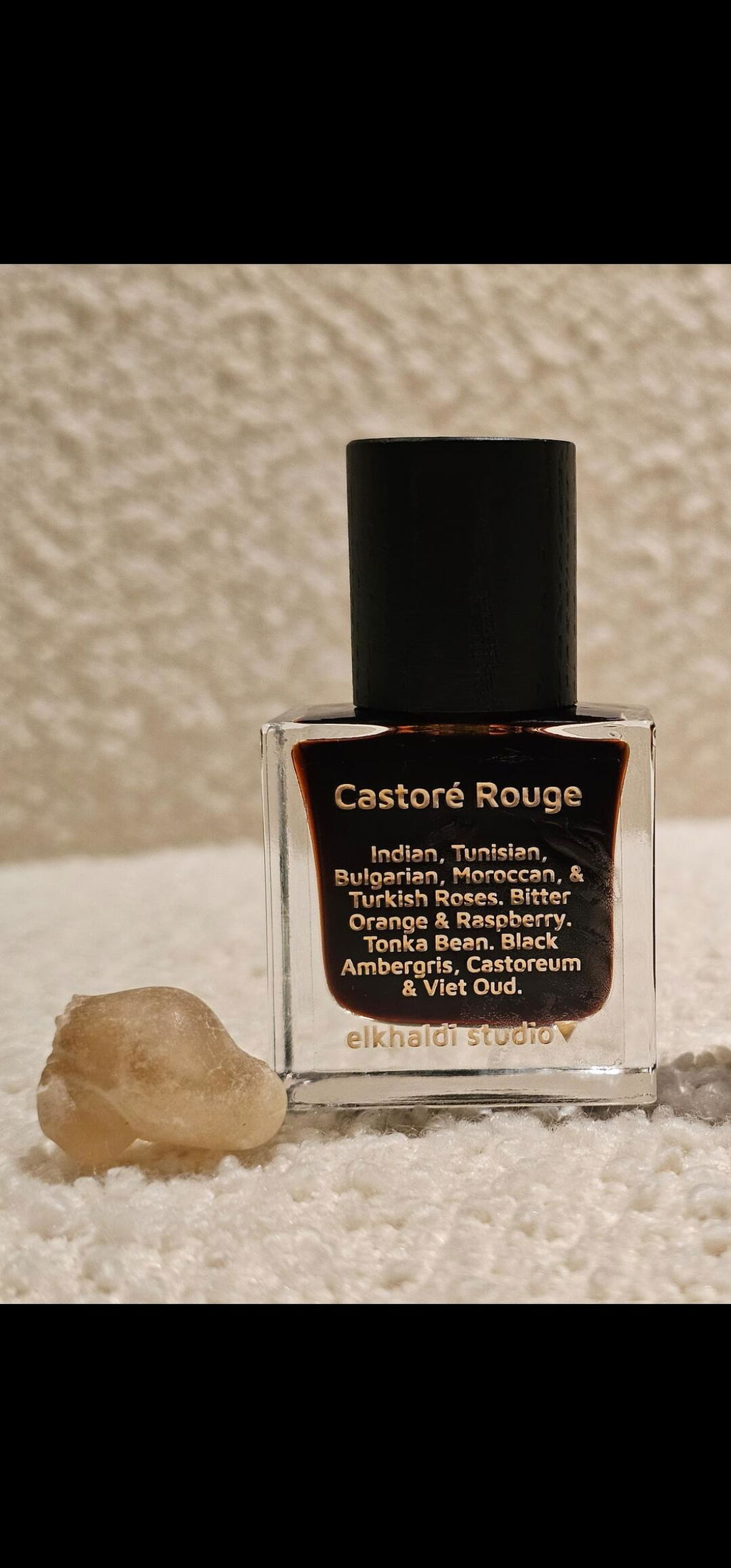
Castore Rouge
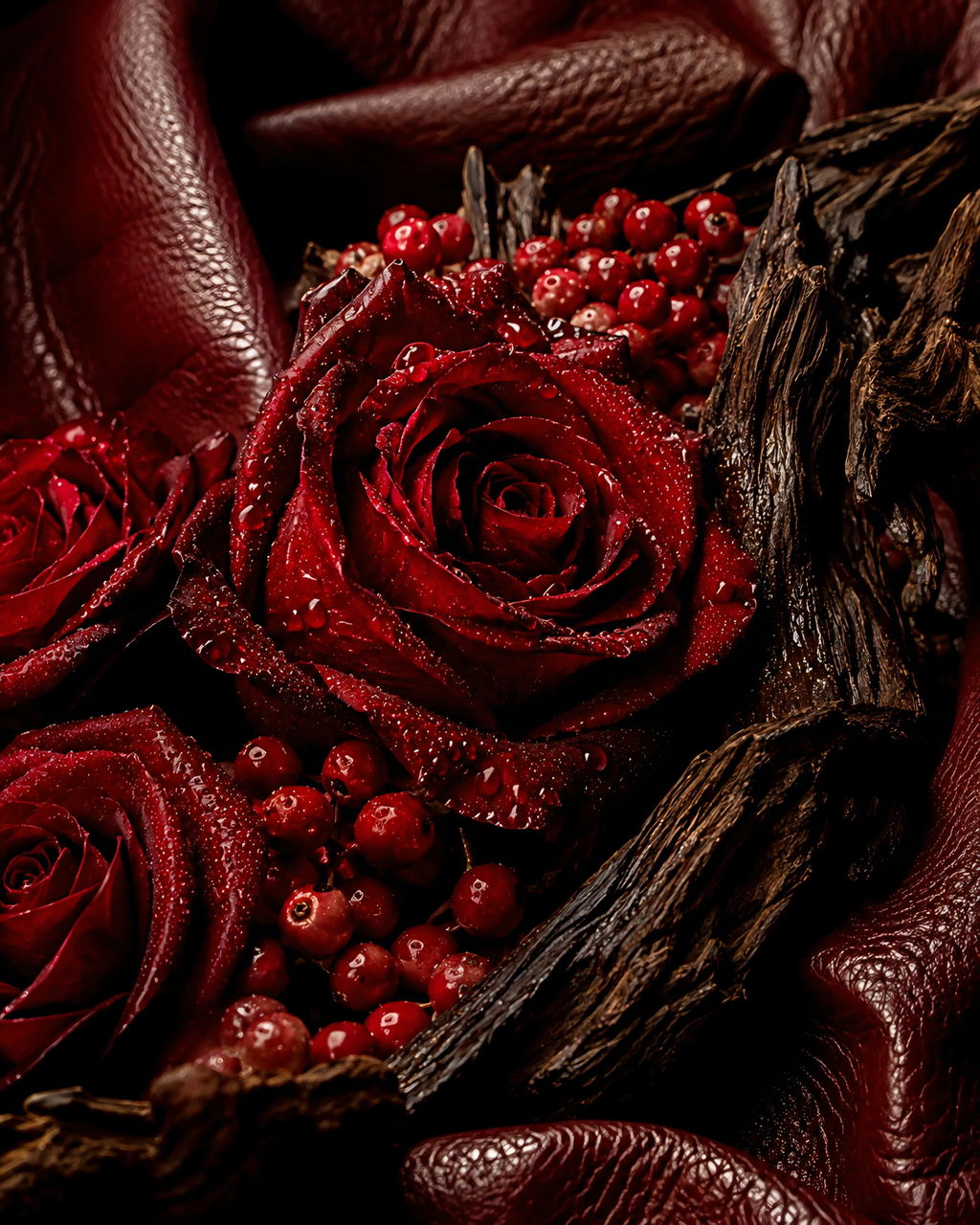
Castore Rouge is an opulent composition. Opens with vibrant roses and tart raspberry. Oud, Castoreum, Ambergris work together to ground the composition and give it a strong foundation.
Dark and vibrant, sweet and sour. Overall a well balanced composition where each ingredient plays its role but doesnt overwhelm the others
How accurate was the description in your experience?:
Very different
Spot on
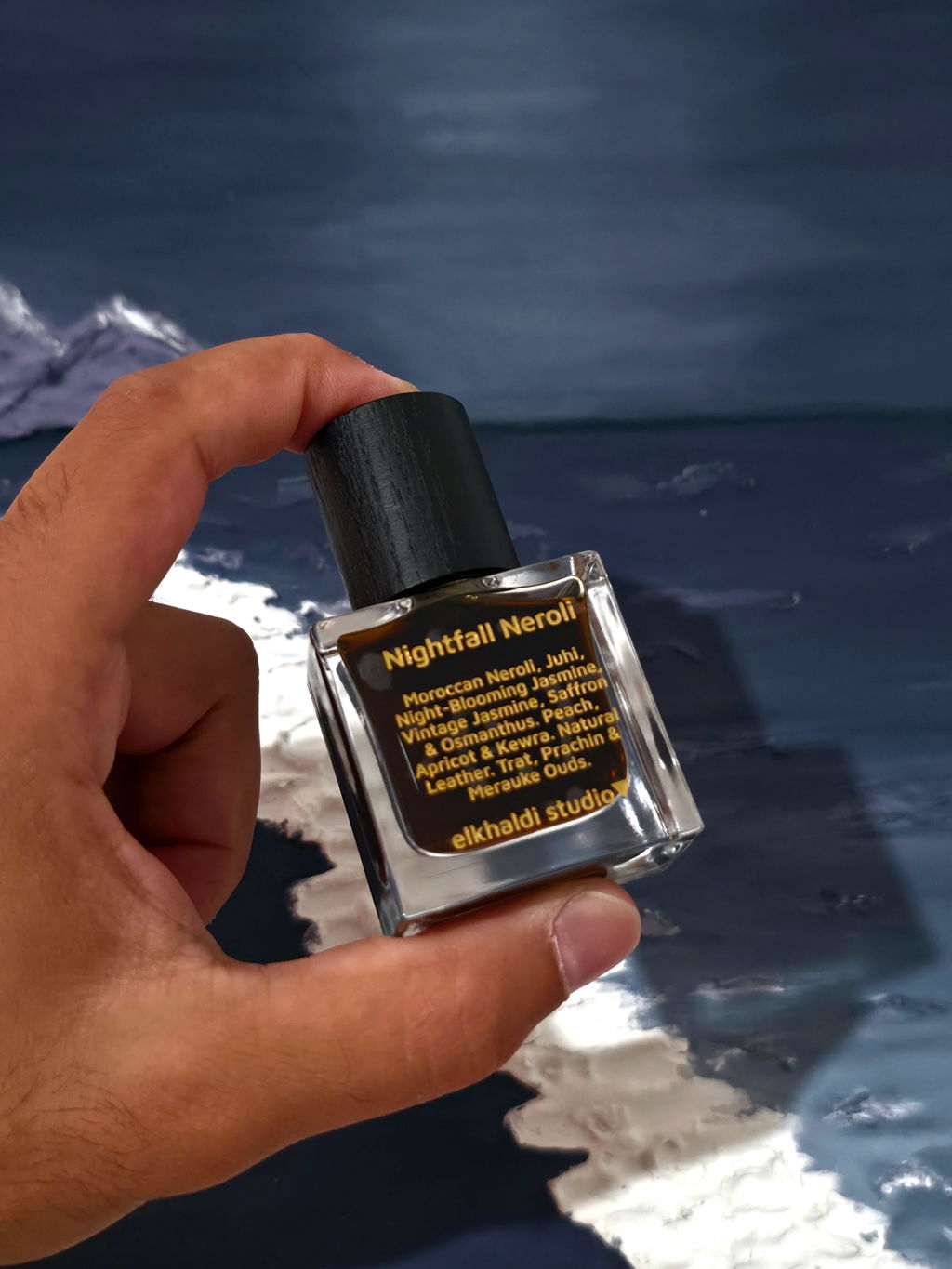
Nightfall Neroli
Uhhhh is the 1st impression as always with my Elkhaldi sprays. I love his opulent style. You immediately smell that he aint joking when he says that his perfumes are extraits with high concentrations.
This one starts with a heavy, rich, opulent & realistic jasmine. Between floral (supported by the White floral Neroli) & fruity (supported by the fruity aspects of the Osmanthus). The sharp or green aspects of the Jasmine/Night-blooming Jasmine/Juhi are absent, exactly to my liking. The indolic aspect of the jasmine is just there to hug the dark aroma of the leather accord & melt into probably the most beautiful natural leather accord I have smelt. Dark, smooth, exclusive, seductive, woody & drenched in the resinous goodness of Oud.
This is definitely a night out fragrance, a wedding fragrance & an easy to like fragrance.