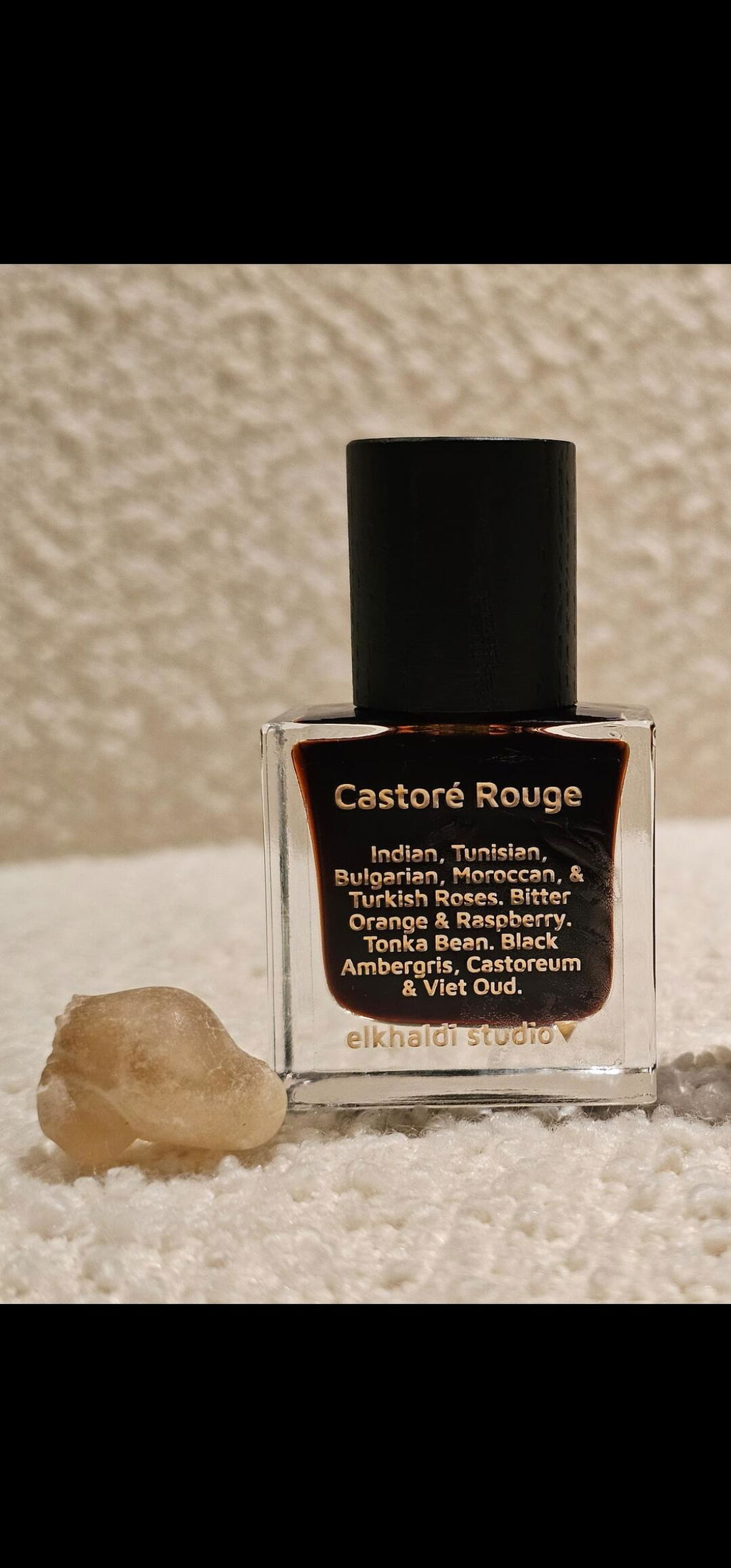
So far, I've mostly relied on my own judgement, as the maker, to decide how best to present a scent. But many of you have asked for lighter versions: lighter on clothes, lighter in presence, and lighter on the wallet. After all, a blend is made to be worn — by you!
I've always tried to give you a choice, so each blend can become your own. That started as X Editions, where "X" was whatever you wanted to add to a blend, and over a few releases it became the more focused set of Add-ons I offer today.
Some blends want to stay dense, and some want to stay light. So I'll be revisiting some of my current blends to make lighter versions of them that, to my nose, are still concentrated enough to give each blend what it deserves.
To drive the point home on concentration, let me clarify a few things.
You experience a perfume when its scent molecules physically reach the receptors in your nose, either because you sniff your skin up close or because the molecules have drifted into the air around you. That drifting is what we call projection.
But reaching your nose isn't enough. You only notice the molecules your receptors can detect. Think of it like Lego: a molecule has to click into a receptor that fits it. Each receptor fits a range of shapes, and each molecule fits several receptors, so every scent is a pattern of pieces clicking into place. Not everyone has the same pieces. Some people can't smell certain molecules at all, and certain musks are a well-known example. That's one reason the same blend can smell different to you than to someone else.
What the scent sits in matters too. In a spray, the scent is dissolved in alcohol. Alcohol evaporates within minutes, so a spray opens fast and fills the air right away. Once the alcohol is gone, the scent molecules keep leaving your skin on their own, each at its own pace: the lightest first, the heaviest last.
In an attar, the scent sits in oil. Oil barely evaporates, so it holds the molecules back and lets them go slowly. That's why attars sit closer to the skin, project less, and can last a long time.
Warmth speeds up both. A blend behaves differently on a hot day, and on your wrist compared with your shirt.
Which brings me to a trade-off. A molecule is either on your skin or clothing, or in the air. There's no Schrödinger's cat business in perfumery; it can't be in both places at once. For the same amount of perfume, the faster it leaves, the more you smell it now and the less is left for later. Slower release means softer projection that lasts longer.
It's a trade-off, not a strict rule. Wearing more, or wearing a stronger blend, can give you more of both.
Then there's concentration itself. Think of scent molecules as people in a room. A crowded room is loud, noticeable, and slow to empty. A room with fewer people is quieter, airier, and empties sooner.
But the people aren't all alike. Some leave almost as soon as they arrive; others stay until the end. With natural materials, who is in the room matters more than how many. The same material can behave differently depending on how it was processed or how long it has aged. That's why a number on a label tells you so little, and why I judge a lighter version by nose, not by percentage.
A lighter version is softer, less dense, and fades sooner. It also has an upside: some materials show different sides of themselves when they have more room. A lighter version isn't just a weaker copy. It can reveal facets that the denser one hides.
Where you wear a scent matters too. Your skin has its own chemistry: its natural oils, moisture, warmth and pH all interact with the blend. Drier skin often lets a scent fade faster, while oilier or well-moisturised skin tends to hold it longer. Even the condition of your skin on a given day plays a part. That's why the same blend can wear differently on you than on someone else, and even on you from one day to the next.
If you want a more even, predictable experience, try your clothes. Fabric has no chemistry of its own to change the scent and no body heat pushing it off, so a blend tends to smell closer to how I made it, and it often lasts longer too.
That's another reason I'm making lighter versions of the current drop. Many of you wanted to spray them on light-colored shirts, and the denser versions, rich in dark natural materials, can mark pale fabric. The lighter versions are much gentler on clothes, but natural materials can still leave a trace, so test on a hidden spot first.
When someone asks me what the concentration is, my answer is usually "enough." Now there's simply a "lighter enough."