Do all materials need to be expensive?
It's a loaded question, and the honest answer is: it depends.
Material cost is driven by many things: rarity, how hard it is to source (sometimes that means negotiating with and convincing an owner to let it go), production volume, age, scent profile, shipping, and rising costs across much of the supply chain.
Whether a material is worth using in a blend is a different question, and I think it's best answered from the consumer's side. As a perfumer making work for people, I ask myself: will someone actually appreciate this material, whether for its rarity, its cost, or its scent? Not every material will interest every customer, and rightly so.
I'll admit that, as a perfumer who aspires to work with rare materials, getting my hands on something hard to find thrills me, as I imagine it does every perfumer. But the litmus test is this: does the material add something to the blend beyond romance and nostalgia?
In my experience, some materials do, and some blends genuinely benefit from them.
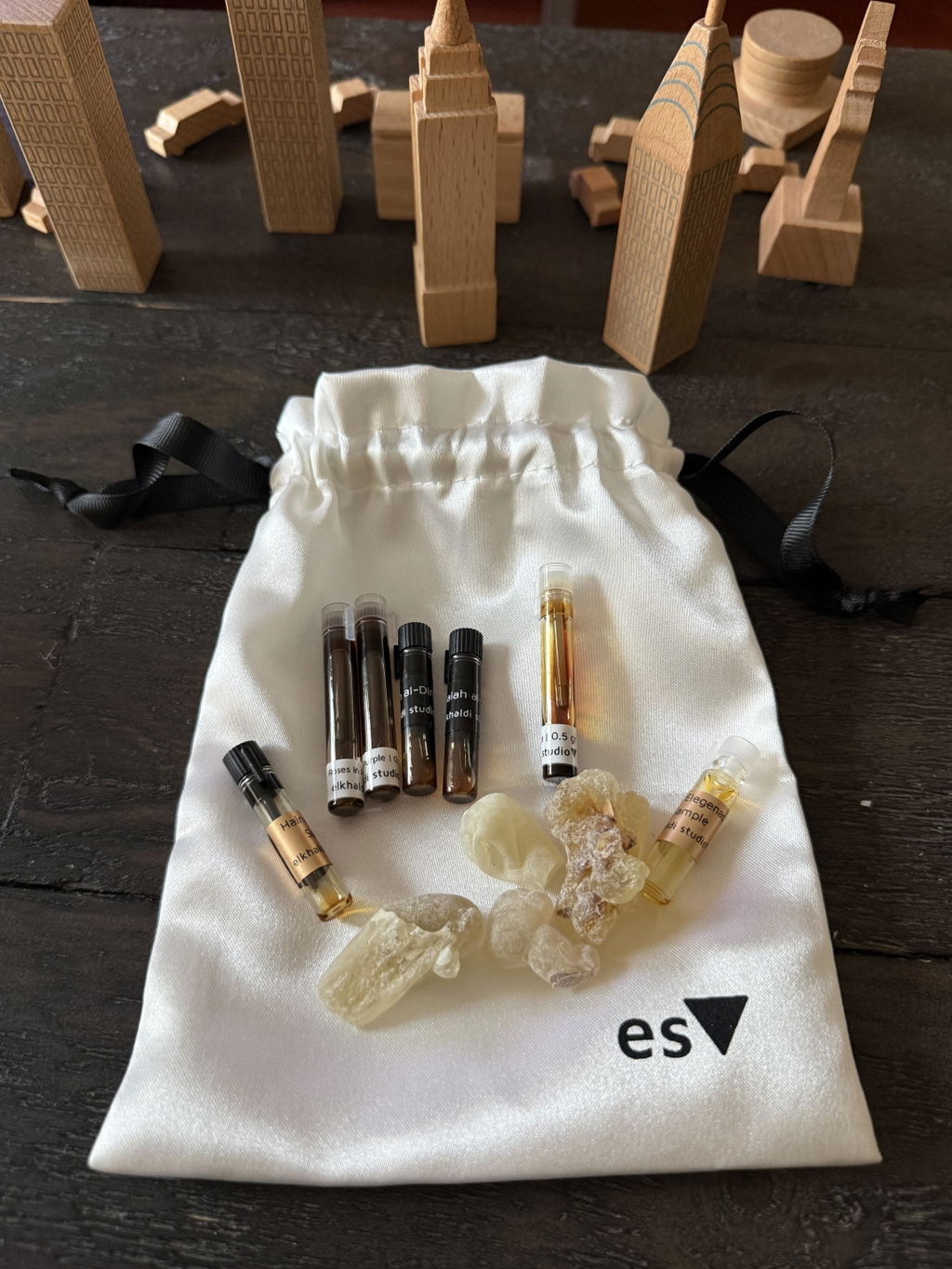
Qinan Rose and Soul of My Soul would not be what they are without high-grade Hainan oud (Qinan Rose) and Two Souls, a vintage Papua rose (in both sprays).
With Chinese ouds in particular, many lean generic to my nose. It takes a great deal of sampling and testing to find one that is truly unique and worth offering. You might try 20 oils to find one you love. Other ouds have better odds, more hits than misses, but not Chinese.
Patchouli is similar. I've smelled nondescript patchouli oils, and others that could honestly be considered perfumes in their own right. I may offer one as a soliflore in the future.
The effect of a great material isn't always a sharp spike in one note. Often it's an overall upgrade to every aspect of the blend.
Take Musk Melange, the blend so many of you loved. At the time I offered it at half my own cost, because I wanted people to try my work. Had I priced it at its actual cost plus a margin, I'm not sure it would have been noticed the way it was. That blend contains many musk tinctures that are around a decade old. You can rarely achieve something like it without those materials. You might come close, and the effect of age can be simulated or reverse-engineered (as in the upcoming Misk Ateeq), but it can't truly be replicated.
Beyond the age of the material itself, there's the curation and preparation: tincturing, filtering, treating, and rebalancing to accentuate one note over others. That takes time and effort, and often means losing material along the way. In any other industry, we'd call that R&D.
Oud Session and Ambergris Spectrum, among others, took a great deal of work to prepare. I often work on a blend for many months, sometimes closer to a year, before it reaches the online store. It isn't only the materials or the process; it's also the time the materials need to age.
So the answer is: some blends can be made with lower-cost materials, and others simply can't.
A great deal goes into making a blend, and then comes the final step: pricing it. My approach is to consult a small circle of select customers, perfumers, and vendors before anything reaches the store. They know the market, and they buy and collect themselves. Think of them as my own board of directors.
After all, I could put gold leaf in a bottle, but it wouldn't add anything noticeable to the scent beyond an attractive look (unless it triggered some unexpected chemical interaction, which isn't something I care to explore in my work right now). In the end, the question comes down to the consumer: would that be worth a higher price tag?
I always aim to price blends in line with their current market value. My rule is that nothing should be overpriced. I look for the sweet spot: high enough to cover costs and fund future blends, but low enough that things actually move.
Pricing is the other end of choosing materials, and neither happens in a vacuum. Making perfume is about far more than clicking "buy" on one oil or another based on price.